
On this page
Editorial field guide · Fault diagnosis
Marine Engine Vibration Diagnosis: A Measurement-First Guide
“The engine vibrates” is not yet a diagnosis. Note when it happens, how frequency changes with rpm and whether it occurs in neutral, ahead, astern or only underway.
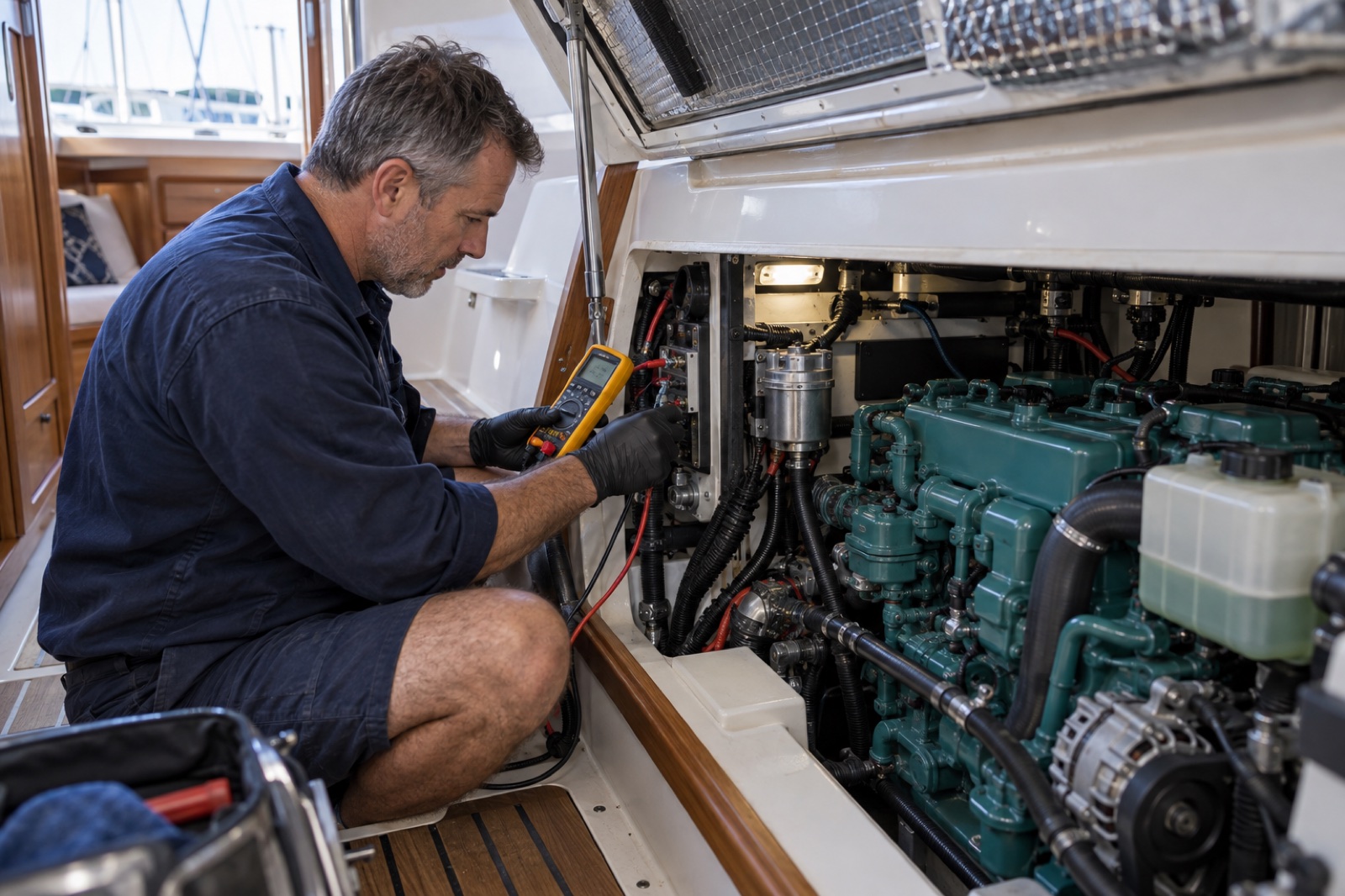
Create a safe test matrix
With a competent operator and safe mooring arrangement, record vibration at idle and stepped rpm in neutral, then compare ahead and astern only where safe and permitted. A fault present in neutral points away from the propeller; a fault appearing only in gear moves driveline load higher on the list.
Inspect before adjusting
Check for a loose bracket, failed mount, hose touching the hull, exhaust contact, debris on the propeller and visible shaft movement. Do not adjust mounts to hide a symptom until structural condition, coupling fasteners and alignment can be assessed correctly.
Alignment is a complete-system check
Shaft alignment changes with vessel loading, temperature and flexible-mount settling. A coupling gap alone does not prove the shaft, stern tube, cutless bearing and engine are correctly related. Measurements may need to be taken afloat after the hull has settled.
Bring useful evidence
Video can capture the sound and movement, but record rpm, gear, boat speed, sea state and when the symptom began. A mechanic can diagnose much faster from repeatable conditions than from “it feels worse lately”.
Frequently asked questions
Can a bent propeller cause vibration only under load?
Yes. Propeller damage, fouling and cavitation typically show when the shaft is driving, although other driveline faults can behave similarly.
Should engine mounts be adjusted at home?
Adjustment without measurement can worsen shaft alignment and bearing load. Inspect and record, then use a suitably equipped marine technician.
Why does vibration change after launching?
Hull support, loading and time afloat can change alignment. Final checks may need the vessel floating in its normal condition.
Terminology can differ between manufacturers. For definitive specifications and intervals, consult the current manual for the exact engine and the relevant manufacturer or Australian authority resource.
- 1Flywheel
- 2Marine gear
- 3Coupling
- 4Shaft & bearings
- 5Propeller