
On this page
Editorial field guide · Fault triage
Marine Diesel Troubleshooting Flowchart
Troubleshooting should narrow the fault without creating a second one. Begin with safety, define the symptom precisely, then test the simplest branch that can disprove a cause.
1. Decide whether to stop
Stop immediately for loss of cooling water, oil-pressure or over-temperature alarm, fuel spray, heavy smoke, metal impact, water in oil or uncontrolled rpm. Secure propulsion, make the vessel safe and use professional help where consequences are high.
2. Define the symptom
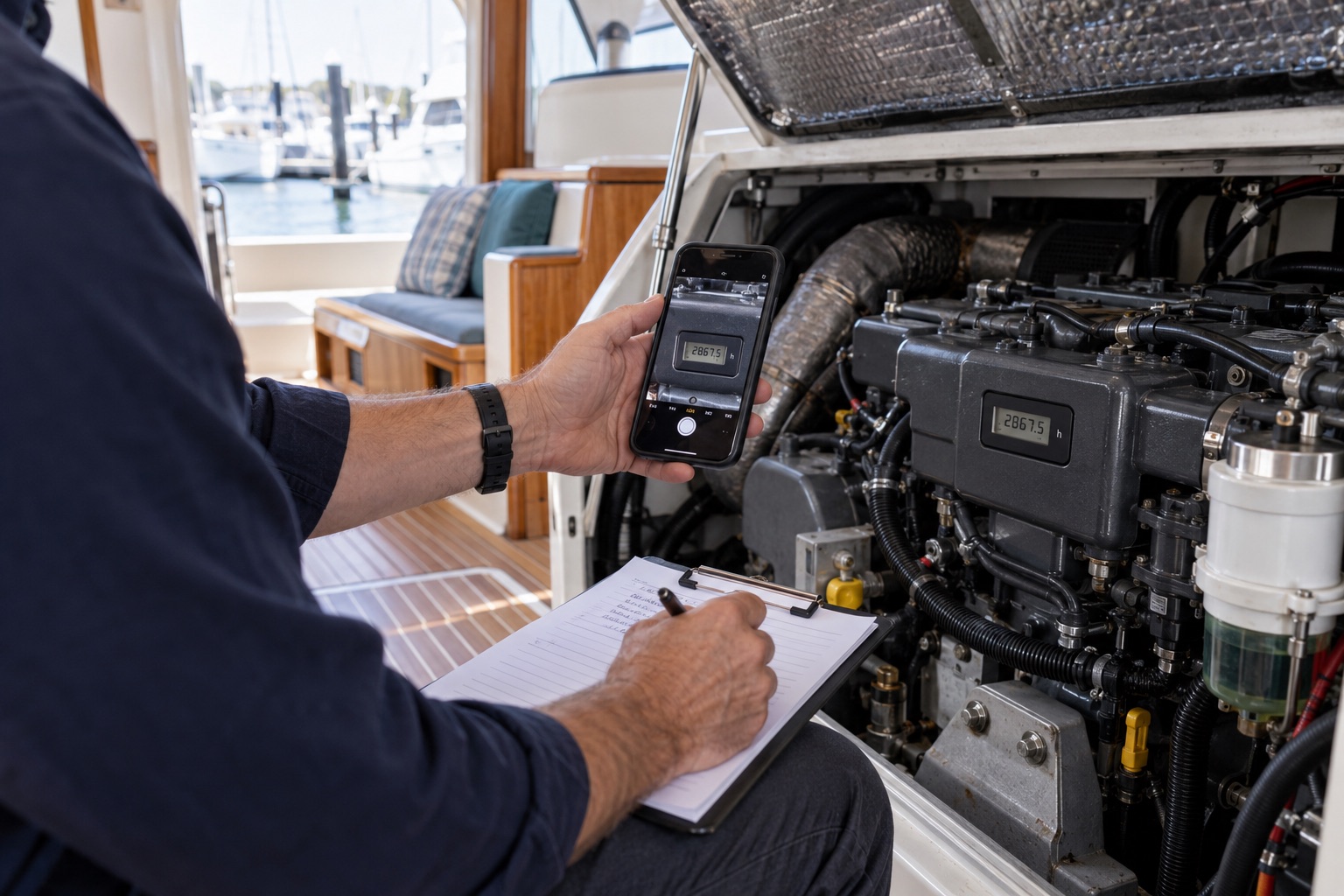
Does the starter crank? Does the engine fire then stop? Is temperature high at idle or only under load? Is smoke black, white or blue? Record instruments and conditions before switching systems off.
3. Choose the correct branch
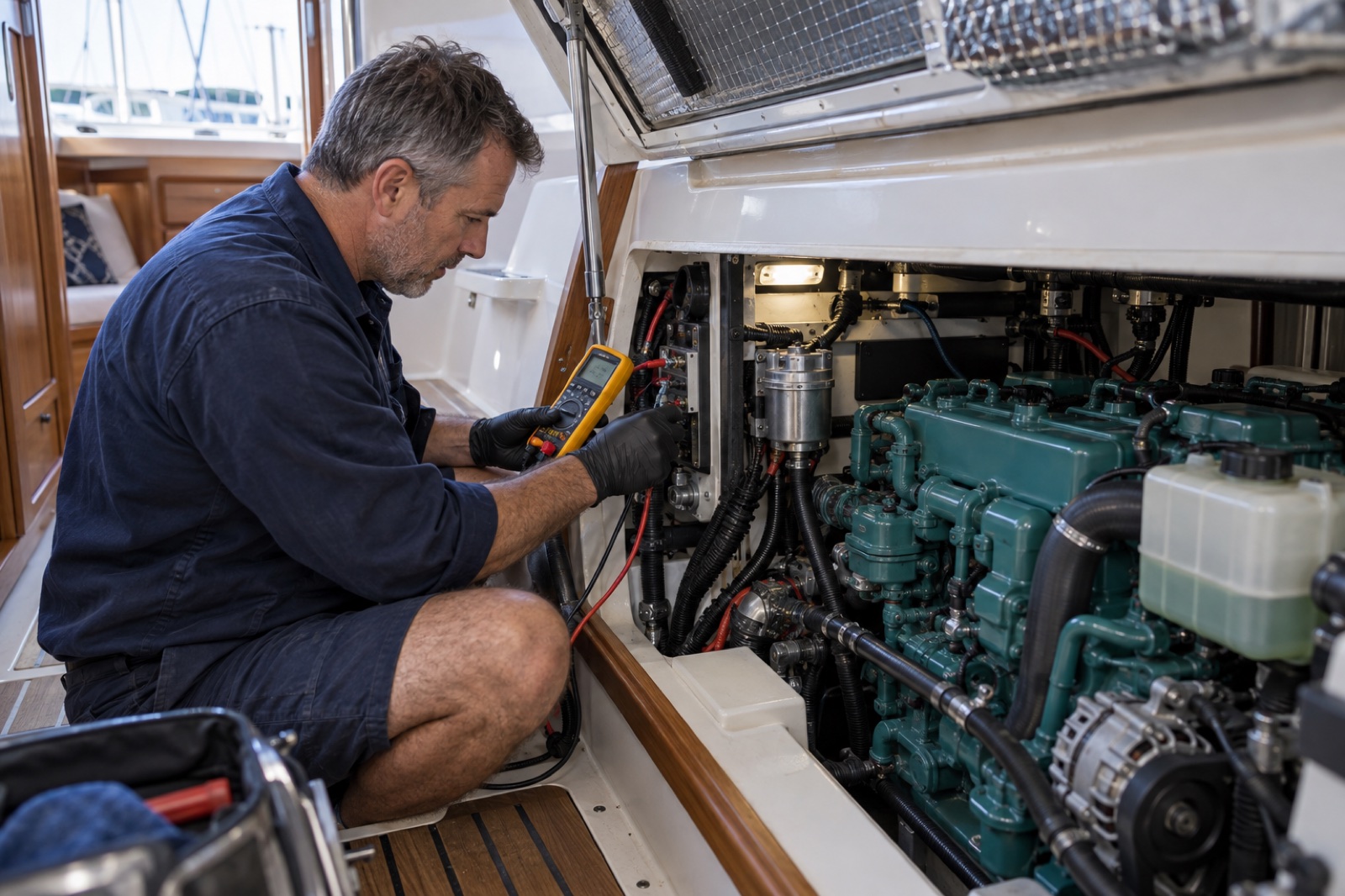
No crank leads first to battery state, voltage drop, controls and starter circuit. Crank-no-start leads to stop control, fuel supply and air. Overheating begins with raw-water flow and load. Power loss separates fuel restriction from air, exhaust and propeller load.
4. Change one thing at a time
Inspect, measure, record, then act. Replacing several parts together hides the cause and can introduce leaks or air. After a repair, test under the same conditions that produced the fault and check for secondary leaks.
Frequently asked questions
What should be checked first when a marine diesel will not start?
First distinguish no-crank from crank-no-start, confirm the controls and safety conditions, then follow the appropriate electrical or fuel branch.
Should filters and injectors be replaced at the same time?
Not without evidence. Change one variable at a time so the cause remains identifiable.
When should troubleshooting stop?
Stop when safety systems activate, fuel sprays, cooling flow is lost, internal damage is suspected or the required measurement exceeds your competence.
Terminology can differ between manufacturers. For definitive specifications and intervals, consult the current manual for the exact engine and the relevant manufacturer or Australian authority resource.
- 1Describe symptom
- 2Check stop conditions
- 3Verify basics
- 4Test one system
- 5Record result