
On this page
Editorial field guide · Preventive maintenance
Marine Engine Belts and Hoses Inspection Guide
A belt or hose usually leaves evidence before it fails. The useful inspection looks for alignment, contamination, heat and movement—not only obvious cracks.
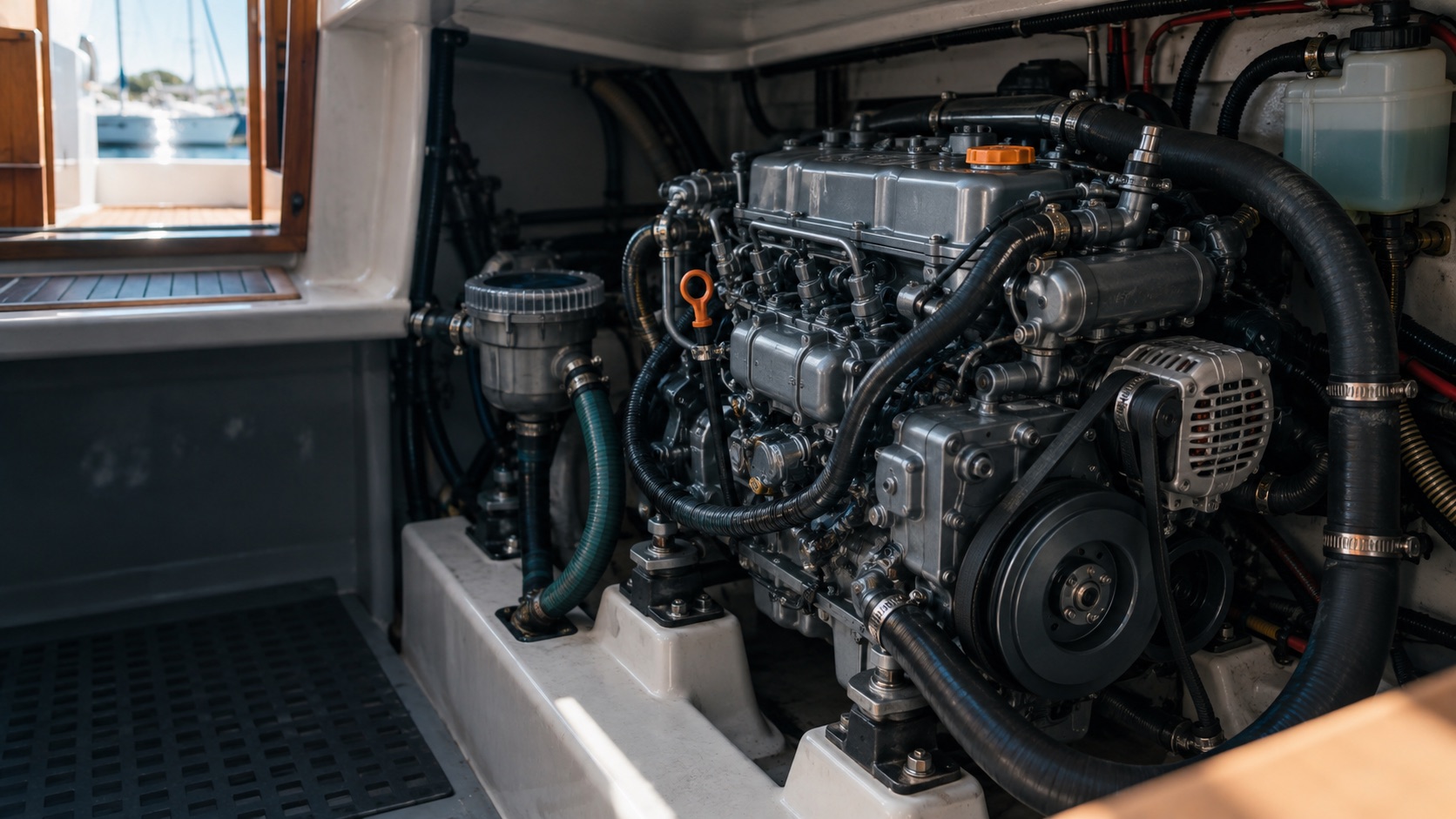
Inspect with the engine stopped
Isolate starting where appropriate. Use a bright light and mirror to see the full belt path and underside of hoses. Look for black belt dust, polished pulley faces, frayed edges, glazing, coolant crust, oil softening, bulges and chafe at bulkheads.
Check alignment and tension
A replacement belt repeatedly shedding dust points to misalignment, pulley wear or incorrect tension. Use the manufacturer’s tension method rather than twisting by feel. High-output alternators can require a matched multi-belt or serpentine system.
Hoses and clamps
Squeeze accessible cold hoses and compare their feel along the length. Replace any that are unusually hard, soft, swollen or cracked. Double clamps are not automatically safer: both must sit on the fitting land, not over the hose tail or against each other.
Record the change
Photograph routing before removal, replace matched belt sets together and recheck new-belt tension after the specified run-in. Keep the old serviceable belt only as a clearly labelled emergency spare.
Frequently asked questions
How often should marine engine belts be inspected?
Inspect before passages and at the interval in the engine manual. Recheck shortly after fitting a new belt.
What causes black belt dust?
Common causes include misalignment, incorrect tension, worn pulleys, excessive alternator load or the wrong belt profile.
Should every hose have two clamps?
Only when the fitting has room for two clamps correctly positioned. Correct hose, fitting condition and clamp placement matter more than count alone.
Terminology can differ between manufacturers. For definitive specifications and intervals, consult the current manual for the exact engine and the relevant manufacturer or Australian authority resource.
- 1Cold condition
- 2Cold start
- 3Loaded run
- 4Leak & heat check
- 5Records match