
On this page
Editorial field guide · Cooling system
Marine Diesel Coolant: Selection, Testing and Change Intervals
Coolant does more than control temperature. Its inhibitor package protects dissimilar metals inside the engine and heat exchanger, and that protection depletes with time.
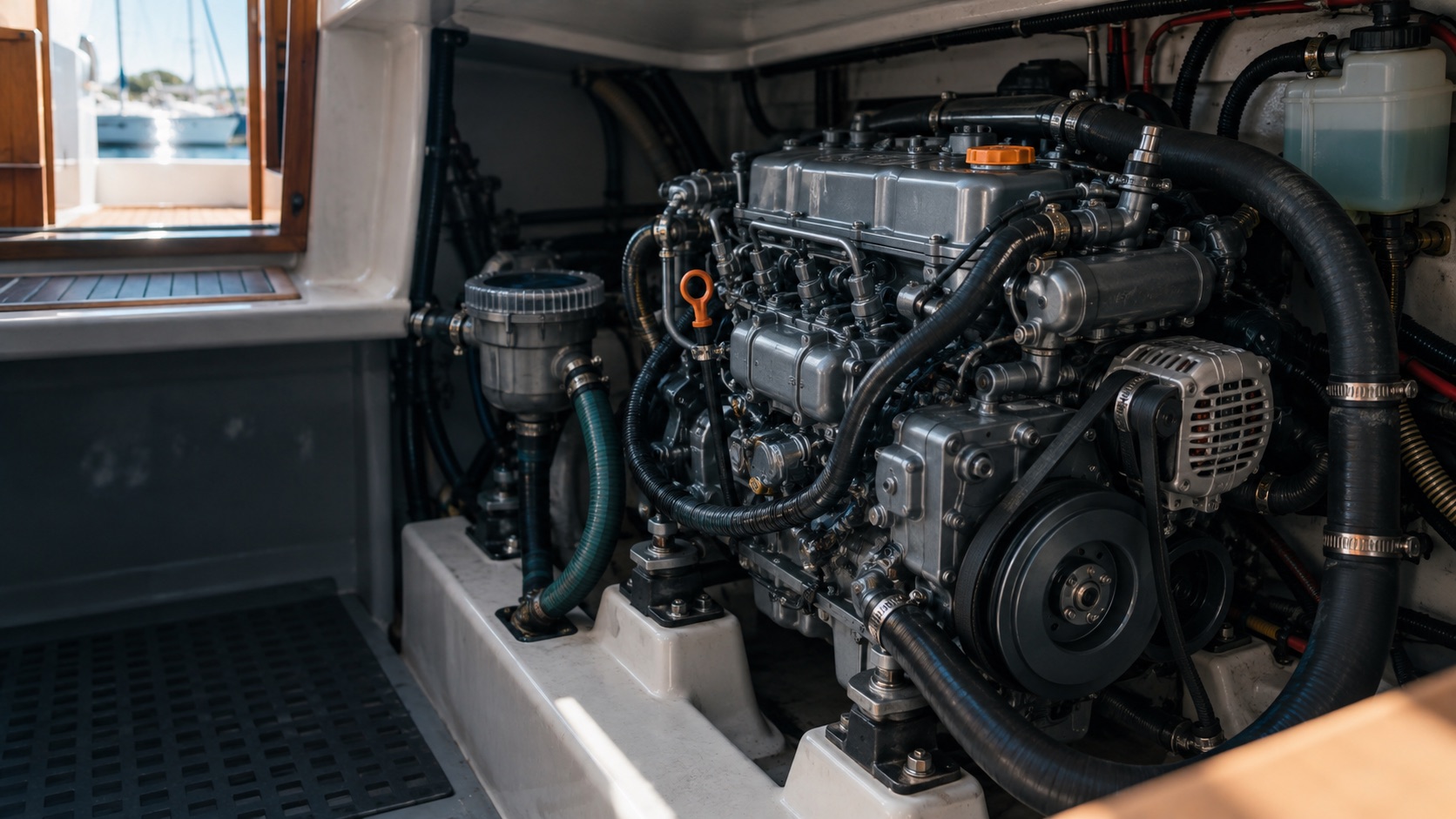
Use the specified chemistry
Start with the current manual or manufacturer service bulletin for the exact engine. Colour is not a technical specification and can vary by brand. Confirm the required chemistry, concentration and any approval code before purchasing.
Avoid casual mixing
Mixing inhibitor technologies can reduce corrosion protection, cause deposits or shorten service life. If the existing product is unknown, the safer approach is usually a controlled drain, flush and refill using the documented procedure rather than topping up with a guess.
Concentration and water quality
Too little concentrate weakens freeze, boil and corrosion protection; too much can reduce heat transfer. Use premix or suitable low-mineral water only where the manufacturer permits it. A refractometer can check concentration, while test strips are chemistry-specific.
Bleeding and follow-up
Air locks can create local hot spots after a coolant change. Open the correct vents, fill slowly, run at the instructed load and recheck only when cold. Inspect the cap, header tank, hose joints and bilge for evidence of pressure loss or leaks.
Frequently asked questions
Can different coolant colours be mixed?
Do not use colour to decide compatibility. Confirm the chemistry and engine approval; if unknown, seek technical advice and consider a complete controlled change.
How often should marine diesel coolant be changed?
Use the engine maker’s time interval and coolant specification. Low engine hours do not stop inhibitors ageing.
Can tap water be used?
Only if the engine or coolant supplier permits it and the water quality is suitable. Premix removes uncertainty.
Terminology can differ between manufacturers. For definitive specifications and intervals, consult the current manual for the exact engine and the relevant manufacturer or Australian authority resource.
- 1Seacock
- 2Strainer
- 3Pump & impeller
- 4Heat exchanger
- 5Exhaust outlet