
On this page
Editorial field guide · Lubrication
Choosing Marine Diesel Engine Oil
Brand preference comes after specification. The correct oil is the viscosity grade and performance category approved for the engine, climate and operating profile.
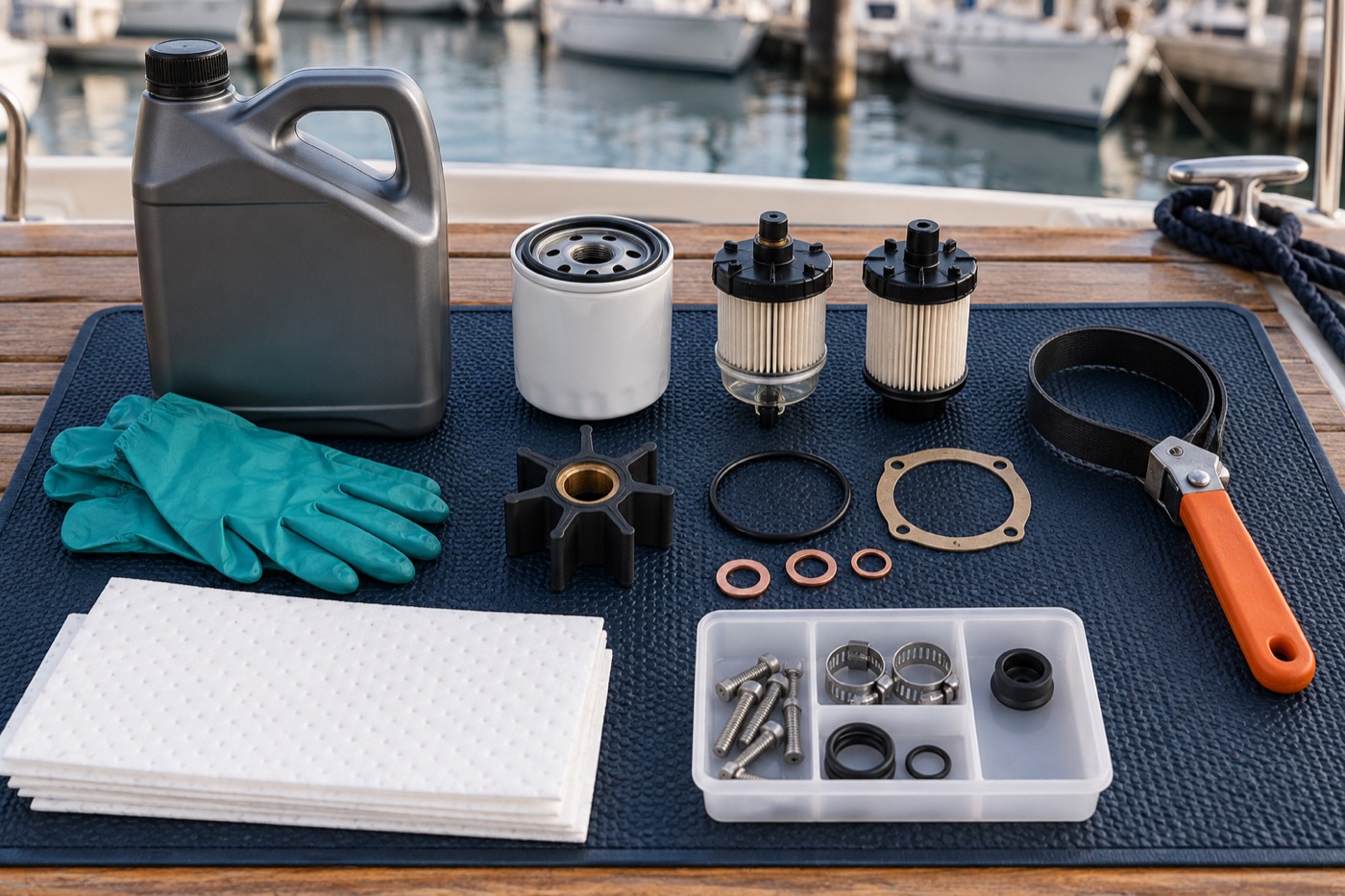
Read the manual precisely
Record the viscosity range, required API or ACEA category, any manufacturer approval and sump capacity including the filter. Older engines may have cautions about modern low-ash or high-detergency products, while newer after-treatment systems can require them.
Viscosity is temperature-dependent
A multigrade such as 15W-40 describes cold-flow and hot-viscosity bands, not oil quality. Select from the temperature chart for the installation and expected conditions. Engine-room temperature under load can differ substantially from the day’s air temperature.
Do not treat additives as repairs
Supplemental additives can alter a balanced oil formulation and may mask symptoms without correcting the fault. Rising level, diesel smell, metallic debris, coolant or milky oil requires diagnosis. Preserve a sample before draining when contamination is suspected.
Change by time as well as hours
Marine engines can accumulate moisture and acids during low-hour, short-run use. Follow both hour and calendar limits, warm the engine where safe before extraction, replace the filter and verify the final level after circulation and settling.
Frequently asked questions
Is synthetic oil always better for a marine diesel?
Not automatically. Use an oil that meets the engine maker’s specification and any guidance for break-in, age and operating duty.
Can two engine oil brands be mixed?
Emergency top-up may be preferable to running low if both products meet the required specification, but compatibility and the manual still govern.
Why does engine oil level rise?
Possible causes include fuel dilution, coolant or water ingress. Stop and diagnose rather than draining back to the mark and continuing.
Terminology can differ between manufacturers. For definitive specifications and intervals, consult the current manual for the exact engine and the relevant manufacturer or Australian authority resource.