
On this page
Editorial field guide · Boat buying
Marine Engine Sea Trial Evidence Guide
A sea trial shows how the complete installation behaves under load. It does not replace compression testing, oil analysis or internal inspection, but it can expose cooling, propeller, mount and control problems.
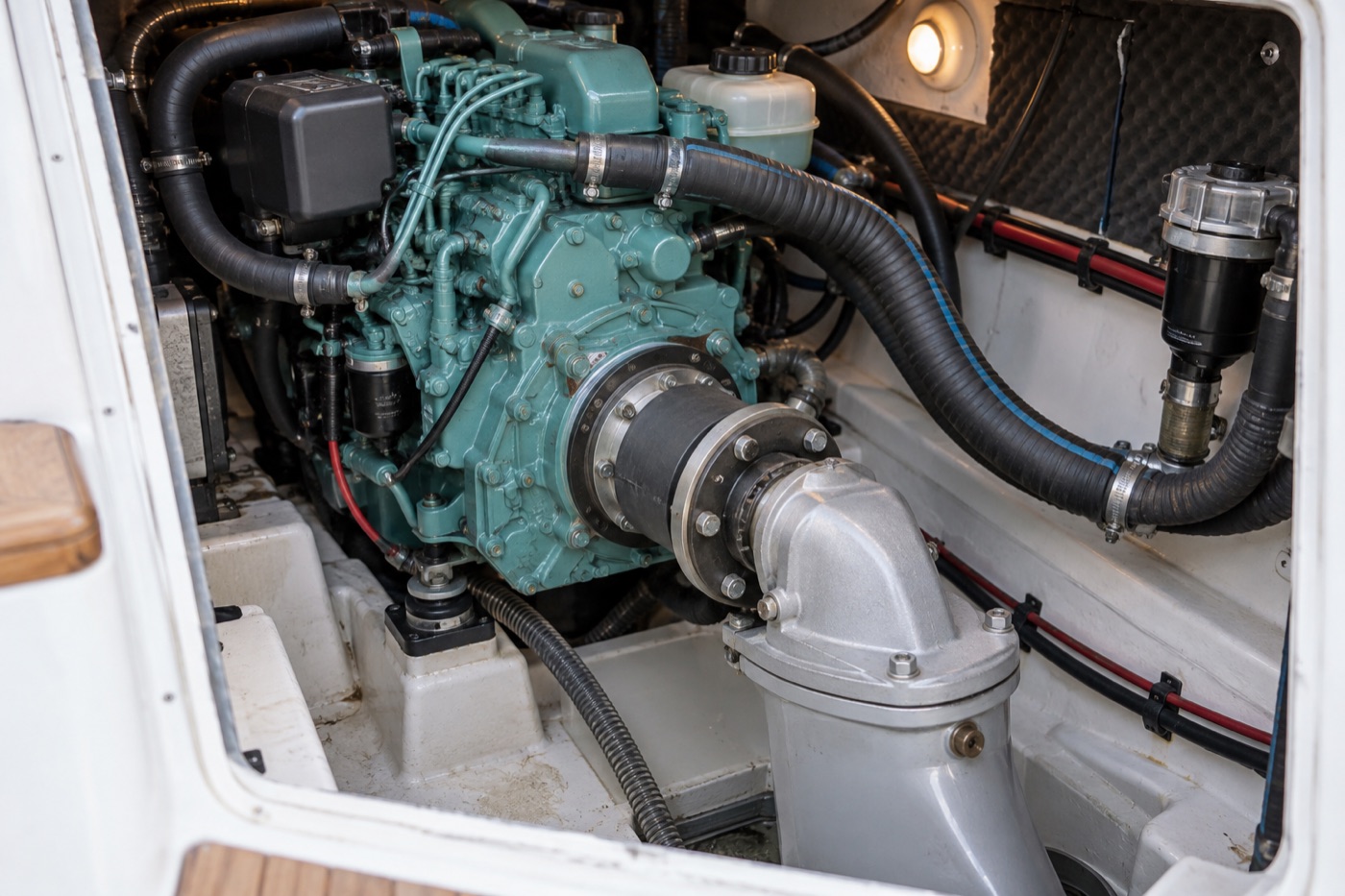
Before starting
Observe whether the engine is genuinely cold, inspect fluid levels and the bilge, note belt dust and leaks, photograph engine and gearbox plates, and confirm the dashboard alarm test. A pre-warmed engine can conceal difficult cold starting.
Build load progressively
Record cold-start behaviour, idle quality, gear engagement, steering response and vibration. Increase rpm in steps while watching temperature, charging, oil pressure where displayed, cooling-water discharge, smoke and vibration. Conduct maximum-rpm testing only when safe and appropriate.
Compare achieved rpm
An engine unable to reach the manufacturer’s loaded rpm range may be over-propped, fouled, fuel- or air-restricted, exhaust-restricted or mechanically weak. An easy high rpm can indicate under-propping. Interpret with propeller, gearbox and hull data.
Inspect immediately afterwards
Look for fresh coolant, oil, diesel or seawater, smell for overheated belts or insulation and check gearbox engagement and control cables. When permitted, take samples while fluids are warm and preserve the chain of evidence.
Frequently asked questions
How long should an engine sea trial be?
Long enough to reach stable operating temperature and demonstrate progressive load; conditions, access and the surveyor’s plan determine the exact duration.
Is a clean exhaust proof of a healthy engine?
No. Smoke is one clue among temperature, rpm, vibration, load, fluids, history and measured condition.
Can the buyer perform the engine inspection?
A buyer can document observations, but an independent qualified marine mechanic or surveyor should assess high-value or safety-critical conclusions.
Terminology can differ between manufacturers. For definitive specifications and intervals, consult the current manual for the exact engine and the relevant manufacturer or Australian authority resource.