
On this page
Editorial field guide · Repower planning
Marine Diesel Repower Measurement Guide
A replacement engine that fits on paper can still fail the installation. Service access, exhaust fall, shaft geometry, controls, cooling and weight distribution all matter.
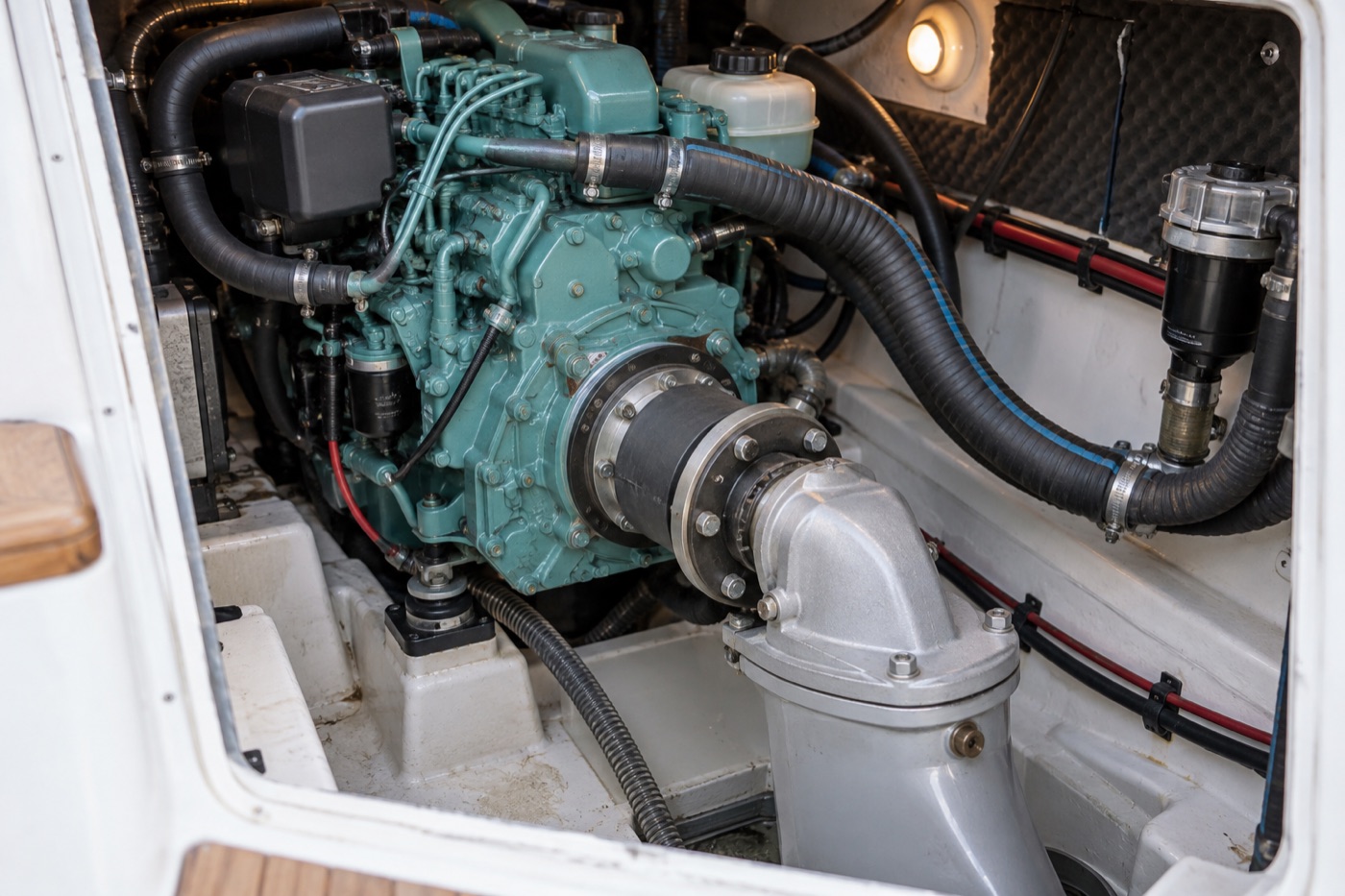
Build a dimensioned survey
Measure the opening as well as the engine bay. Record bed width and height, shaft centreline, coupling position, clearance above and around the engine, lifting route and the space needed to remove filters, impeller, starter and heat exchanger later.
Map every interface
Document shaft diameter and length, coupling, gearbox ratio, propeller, exhaust hose and waterlock, raw-water intake, fuel supply and return, controls, wiring, charging system and instrumentation. Photograph and label each connection before quotes are prepared.
Check the complete driveline
Power alone does not select the gearbox or propeller. Displacement, waterline, reduction ratio, shaft limits and propeller aperture shape the result. A change in engine rpm or ratio usually requires a new propeller calculation.
Compare installed cost and maintainability
Quotes should separate engine package, removal, beds, shaft and propeller, exhaust, controls, electrics, cooling, haul-out, commissioning and certification. Give service access real value: a cheaper package that cannot be maintained will remain expensive.
Frequently asked questions
Can horsepower alone select a replacement marine engine?
No. Torque curve, rated rpm, gearbox, propeller, displacement, installation limits and intended duty all affect suitability.
Should the old propeller be reused?
Only after calculation and inspection show it matches the new engine and gearbox combination.
What clearance is most often forgotten?
Service clearance for filters, impeller access, heat-exchanger removal and lifting the engine through the boat—not just running clearance.
Terminology can differ between manufacturers. For definitive specifications and intervals, consult the current manual for the exact engine and the relevant manufacturer or Australian authority resource.
- 1Engine envelope
- 2Mount centres
- 3Shaft height
- 4Service zones
- 5Removal path