
On this page
Editorial field guide · Lay-up
Marine Diesel Long-Term Storage Guide
Storage damage comes from moisture, stale or contaminated fuel, corrosion and neglected batteries. A written lay-up and recommissioning record prevents well-meant shortcuts.
Before the final run
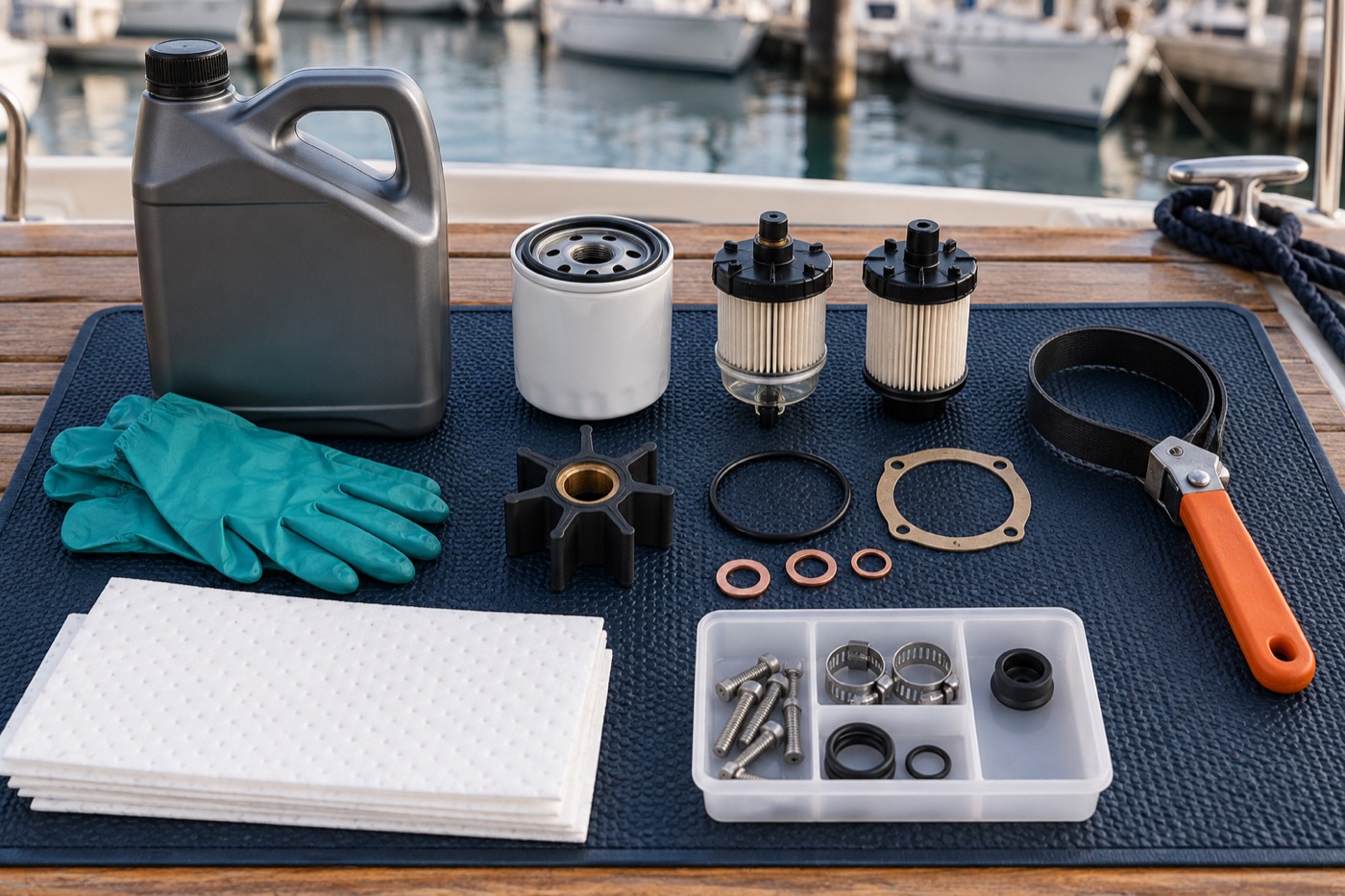
Complete overdue service work while the engine can still be operated and faults found. Stabilise or manage fuel only with products and methods approved for the system. Run long enough under load to reach full operating temperature before shutdown.
Protect internal and raw-water systems
Follow the engine maker’s storage procedure. It may specify oil change, coolant check, raw-water draining or approved antifreeze, exhaust protection and cylinder preservation. Never pump toxic coolant overboard; capture and dispose of it responsibly.
Control moisture and batteries
Clean salt from the engine space, dry the bilge, protect exposed metal appropriately and maintain ventilation without leaving direct spray paths. Isolate, charge and test batteries according to their chemistry and the vessel’s electrical design.
Recommission deliberately
Remove every cover and tag, open the correct seacocks, inspect fluid levels, hand-check accessible moving parts and restore batteries. At first start, verify oil pressure, cooling-water discharge and leaks, then run under load and recheck when cold.
Frequently asked questions
Should a stored marine diesel be started briefly every month?
Short unloaded runs can add moisture and soot without reaching full temperature. Follow the manufacturer’s storage procedure instead.
Should the fuel tank be full during storage?
Advice depends on tank material, fuel quality, duration and local rules. Manage water and contamination risk using the vessel and fuel supplier’s guidance.
What is the biggest recommissioning risk?
Forgetting a closed seacock, blocked intake or disconnected component. A written tagged checklist is the best defence.
Terminology can differ between manufacturers. For definitive specifications and intervals, consult the current manual for the exact engine and the relevant manufacturer or Australian authority resource.